

Last seed starting blog post we broke down hardness zones & cold weather loving plants versus warm weather loving plants.
I hope you’ve drafted your list of veggies you’d like to grow. Because now we’re going to talk about whether certain plants prefer to be directly sown into the ground or if it’s better to transplant them.
There are plants that actually prefer to be directly sown into the ground. Some of these because they are mainly a plant whose root is what we eat. Others because they don’t do well if their roots get hindered during the transplant process.
Some of the plants that prefer to be directly sown into the ground are things like:
- Carrots
- Beets
- Cilantro
- Squash
Some of the plants that do better if you transplant them are:
- Tomatoes
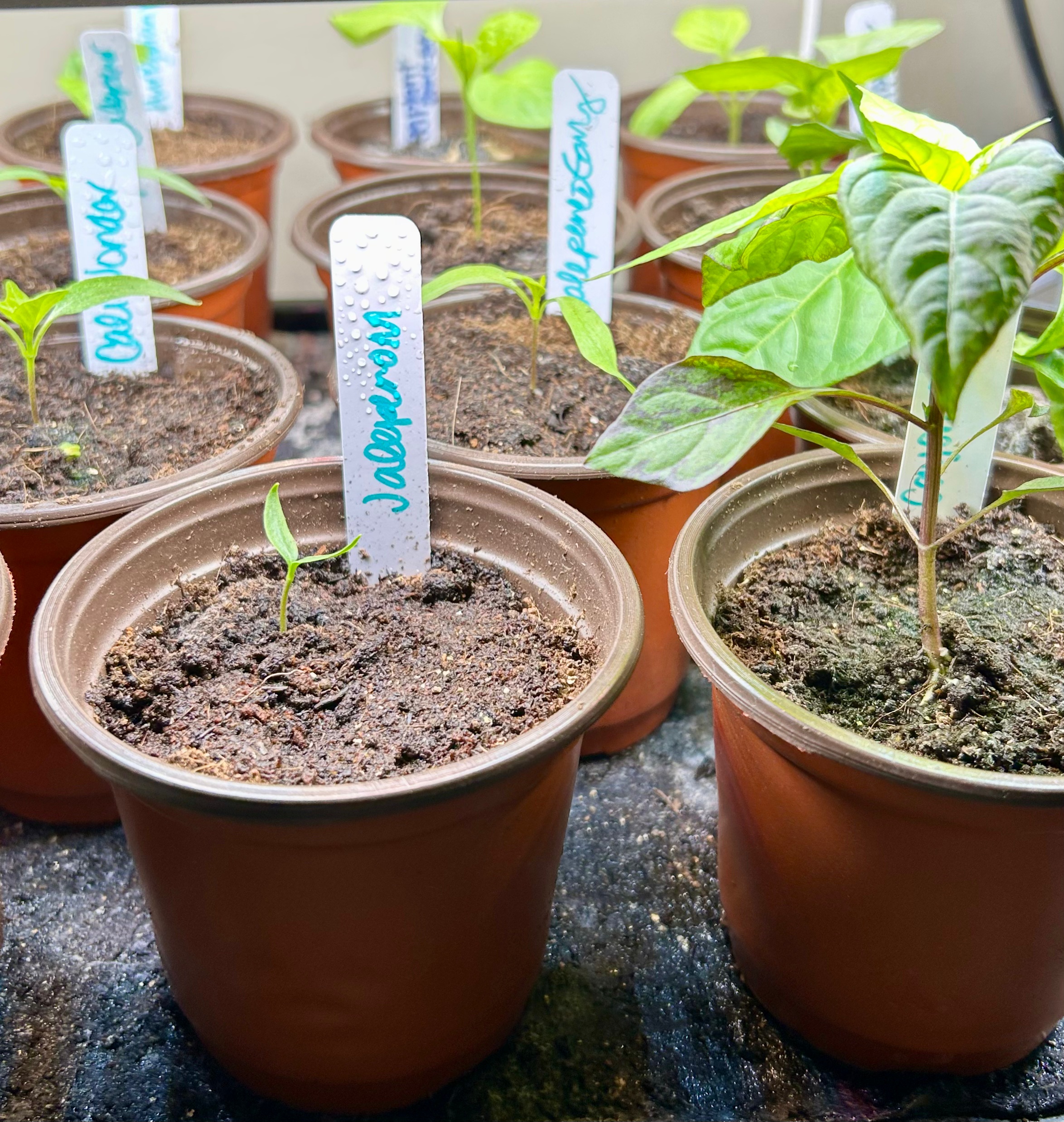
- Peppers
- Onions
Here is the full list of veggies and their preferences for planting:

You can download it as well!
You’ll notice some plants are on both sides of the list. This is because you can choose to transplant or direct sow any of these. No one will stop you if you decide to throw a bunch of tomato seeds into your garden beds. It will take you months longer to get a harvest that way. But ultimately how you do things is up to you! These are the ways most people typically go about putting these into the garden to maximize harvest.
That means, if you’re planning your garden and when to plant what, you have to be considering these factors.
For example. For my city, my typical last frost date is approximately April 11. This means that I plan for transplanting warmer loving plants on that date if all goes according to plan.
When I read my seed packet for peppers for example, I will count backwards from April 11 the weeks it says it will take to prepare those plants. If the seed packet says to start indoors 6-8 weeks before last frost date, I will start the seeds indoors on February 28th at the very latest.
But wait, there’s more. If I want to plant cucumbers (who love to be direct seeded), I will plant them on or around April 11th if there’s no sign of an upcoming frost in the weather forecast.
But wait, there’s more. Now if I wanted to plant a colder loving plant that likes to be direct seeded (like carrots), I’d directly sow them into the ground sometime in March. If there is no sign in the weather forecast of the temperatures dropping lower than 30 degrees in that time.
With that logic in mind I would typically plan my garden out thinking something along these lines here:
February 28: Start pepper seeds inside.
March 15: Directly sow carrot seeds.
April 11: Transplant plants.
So, what I would do is take the list of veggies you want to grow. Then I’d compare which plants like growing in cooler temps versus warmer temperatures. This way I know what can directly be planted in the garden earliest. And then lastly I’d see which can be directly sown and which need to be started inside.
Most of the cooler weather loving plants can survive down to 32 or 30 degrees. So even if there is a frost, they will make it through most likely. Whereas the warm loving plants will die quickly if they are in the ground and there is a frost.
From there I would create an ideal schedule. Planning when to start which seeds inside, when to direct sow, and when to transplant each plant. Just like I showed you above.
Every gardening year is different because there are always unexpected twists. But at least you have a plan. And a plan is better than no plan.
Looking forward to hearing about your plans and happy gardening!
Be on the lookout for part 3! Coming soon.




Leave a Reply